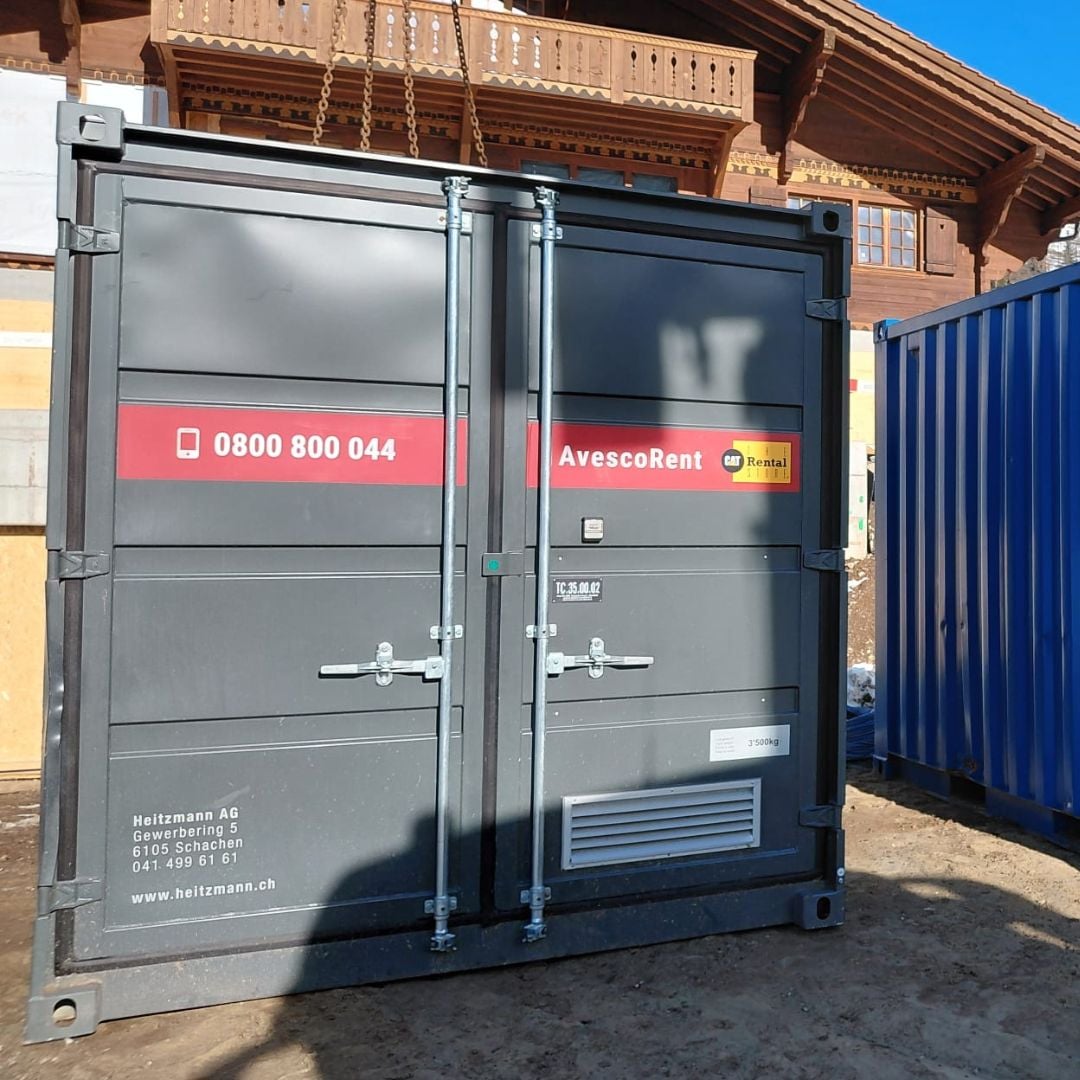
Emergency Plan in Château-d’Oex
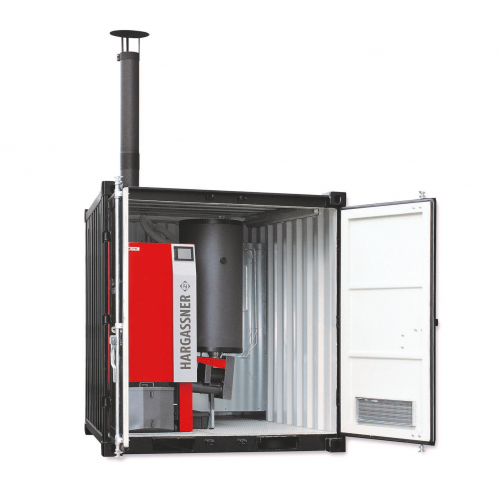
Pellet Heating Plants: A High-Performance and Sustainable Solution
Pellet heating plants are much more than just a heating system. They represent a high-performance, sustainable solution, perfectly suited to demanding construction sites.
A Local and Sustainable Energy Resource
Wood energy, which includes wood pellets, is Switzerland’s second-largest source of renewable energy after hydropower. It covers a significant portion of the country’s heating needs. Moreover, using locally produced pellets from forestry residues valorizes a sustainable regional resource, helping to reduce CO₂ emissions.
A Highly Positive Environmental Impact
Pellets burn in an almost CO₂-neutral way, as the carbon released corresponds to that absorbed during the growth of the wood. This feature is recognized in Switzerland’s energy transition strategies. Furthermore, a large portion of the pellets consumed in Switzerland come from short supply chains, further reducing the environmental footprint and improving supply security.
High Energy Efficiency and Thermal Performance
Modern pellet combustion technologies achieve high efficiency, often close to or above 90%. As a result, they provide consistent and effective heat, even in damp or partially renovated buildings. This performance is essential for maintaining optimal working conditions on site.
Independence from Fossil Fuel Fluctuations
Pellets are a source of energy less dependent on international markets than oil or gas. Switzerland, in fact, has a robust and well-monitored supply, with active oversight of fuel production and availability.
An Economically Attractive Solution
In addition to its environmental benefits, pellet heating is often considered economically advantageous in the long term. This is due to the stability of local fuel prices and incentive programs for low-climate-impact technologies in Switzerland.
In Summary:
Installing a pellet heating plant on a construction site combines thermal performance, sustainability, and cost optimization. Moreover, it fits perfectly within Switzerland’s energy policy promoting the use of renewable energies.

With 15 years of experience within the company, I have gained solid expertise at Avesco Rent as a coordinator, where my main focus was on fostering human connections.
This approach naturally led me to take on a sales role for six years, allowing me to listen to our clients’ needs and offer them tailored solutions.
Today, I work as a Project Manager, overseeing large-scale projects in the energy and temperature control sectors.
I particularly enjoy participating in meetings across the different areas of my clients’ businesses, as it helps me better understand their daily operations and challenges.